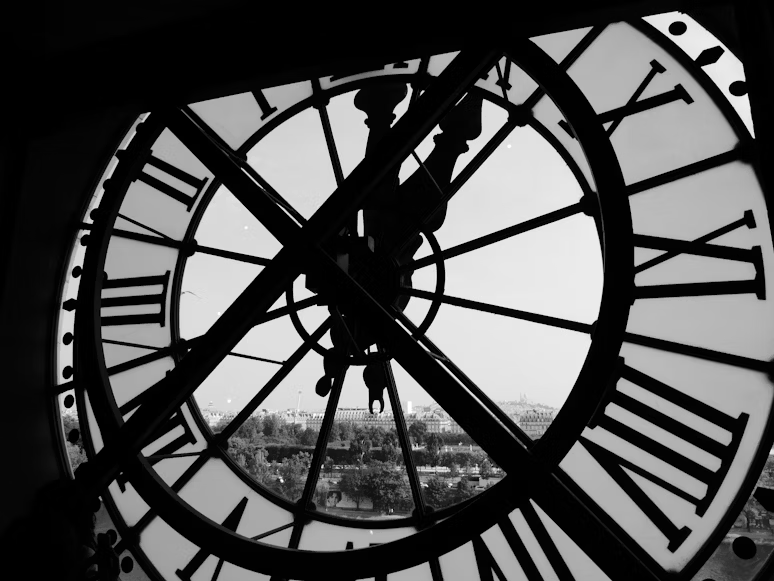
When we use the word commercialization we tend to think of smaller things that can be classified as commodities with value which can be sold to a customer and be used to make profit. In doing so many of us safely ignore larger concepts which aren’t always tangible- such as time.
What is the time? If you asked this question to anyone in 700 CE, they would answer: Morning, Afternoon, Evening or Night. Not very precise and not quite as helpful as today. Fast forward to the 1270-1300, the first mechanical tower clocks were made from Northern Italy to Southern Germany during the Renaissance. As time progressed, this became more widespread with mechanical clocks being built in English Churches such as the Salisbury Cathedral in 1386 and domestic pendulum clocks being invented in 1656 by Huygens in the UK. However, one thing that buggered the United Kingdom at this point of time was the problem of Local Time.
Each town ran its own local time based on the Sun, which made local time a great mess with the creation of railways- causing confusion and resulting in missed trains and safety risks.
As a result of this a common Railway time was introduced which was the same for the entire country. Later the Greenwich Mean Time or GMT was established with the Statutes Act of 1880 officially making GMT the legal time across Britain. And after the International Meridian Conference of 1884, the GMT became the basis of the world’s international timezones.
So it’s 1884 and all is well, time has dominated the world and everyone knows the exact time with no confusion. But is that it?
The imposition of a universal time standard may appear orderly and rational, but at its core, it is a construct born of capitalism’s demand for control, coordination, and profit.
The standardization of time took place in a country that, from the 17th Century, understood only one language- that of commerce. Thus they did what they always do, they colonized time, commodifying it in the process.
Labour began being sold by the hour and for the first time in human history, workers were no longer paid for what they produced but for how long they worked — giving employers total control over time and productivity. Industrialists dictated strict work schedules: 12–16 hour days, 6 days a week — often for meagre wages. The commodification of time led to natural rhythms such as sunrise and sunset being replaced by factory bells and mechanical clocks. Child labour, time autonomy and productivity over humanity led to conditions being indescribable for workers.
However, the industrial revolution and the exploitation aside (which btw is a huge thing to keep aside), the impact of time reached the entire world through the creation of timezones. Well what exactly is a timezone? A time zone refers to any region where the same standard time is kept. It’s supposed to be “approximately 15° longitude wide and extends from pole to pole”- yet why do our international timezones look like…this giant mess?

Timezones apart from the UK are defined as ahead or behind the GMT. Global capitalism depends on synchronized markets — time zones allow smooth functioning of financial exchanges. The reason why the timezones today look, well, the way they do is because of the way world trade works.
Today’s time zones are jagged, irregular, and bend around national and commercial interests — not nature. Countries often chose time zones to align with their major trading partners, rather than follow the natural meridian. For instance Spain follows Central European Time (CET), even though geographically it belongs in GMT — to stay aligned with trading partner Germany. Or that China uses a single time zone (Beijing Time) across its vast landmass to enforce unity and streamline economic planning.
If we come to think of it, colonialism and imperial trade is actually what shaped global time. The imposition of the GMT was only possible because of Britain’s dominance in maritime trade. Former colonies such as India often retained time zones that aligned with the imperial center for economic and bureaucratic convenience.
Time zones may appear as neutral, scientific divisions of the Earth — but in reality, they are deeply human constructions, shaped by trade, politics, and the pursuit of economic advantage. As global commerce expanded, the map of time bent and twisted to serve the rhythms of capital, not the sun.


Leave a reply to kittyhopeful6f24bad9da Cancel reply