Throughout history, all the forms of art we know have been seen as an instrument of control, music more than any other perhaps. During the Cold War, the cultural battlefield was as critical as the political one, with the USSR and the USA vying for global influence through their artistic output. The US had a massive lead in terms of their film industry and Hollywood which influenced the world- thus the soviets countered it with an ‘elevated’ form of art- that of Classical Music and Ballet. The finest example of this is one of the most hauntingly beautiful and politically charged works in history: Swan Lake, by Tchaikovsky.
Before we look into the politics of the 20th Century, let’s take a look at the history of Swan Lake.
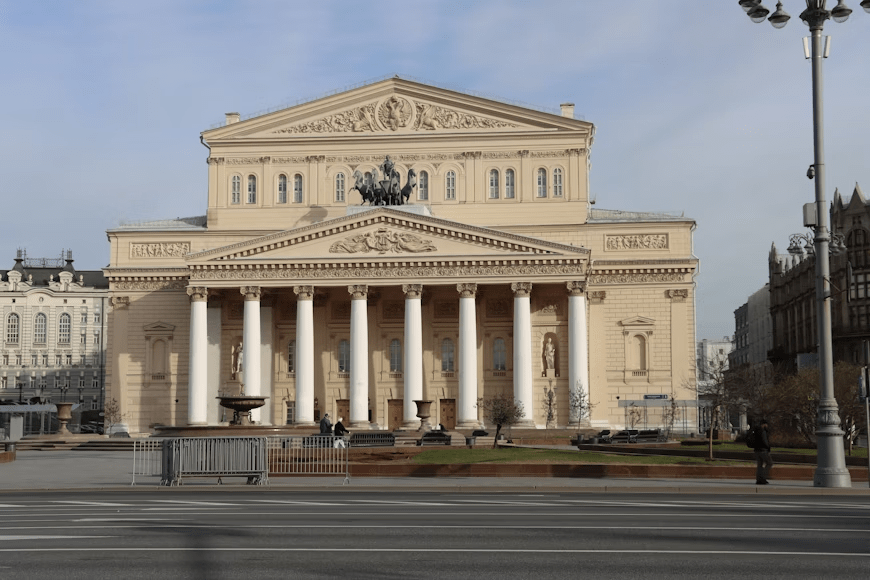
When Tchaikovsky first premiered Swan Lake back in 1877 at the famous Bolshoi Theatre in Moscow (picture attached on top), the poor choreography, bad dancing, and a complex, unballetic score got heavily criticized, resulting in its initial failure. However in 1894, the Act 2 lakeside scene, choreographed by Lev Ivanov, was performed at the Mariinsky Theatre in St. Petersburg as a tribute to Tchaikovsky which was the first time it gained the emotional resonance of the public.
On January 15, 1895, what we saw was the definite revival of the Swan Lake with Lev Ivanov and Marius Petipa as the choreographers, Riccardo Drigo who edited and reorchestrated Tchaikovsky’s score and Pierina Legnani who made history with 32 fouetté turns.
Today there are hundreds of schools of Ballet, however between 1900 to the 1910s, there were two major ‘giants’: The Mariinsky and Bolshoi, which dominated world ballet. However things took a different turn post the Russian Revolution of 1917, as many dancers, artists, and choreographers fled Russia. Not only did this lead to the birth of Ballet in the US, it also led to the process of Russian music being exported to the world.
To dominate a cultural arena, you must first make your rival appreciate its value. In 1934 The American Ballet was founded by George Balanchine in New York, formally institutionalizing Ballet in the United States; it was merely an imported curiosity. But as Americans began to appreciate the art form, they also began to recognize an uncomfortable truth: in this realm, Russia reigned supreme. What was once seen as elitist and foreign soon became a stage where Soviet mastery outshone America’s late arrival.
During the Cold War, the Soviet Union weaponized culture as a form of soft power—and Swan Lake became its most elegant missile. Tchaikovsky’s masterpiece was elevated to a symbol of Soviet artistic supremacy, perfected by Bolshoi, Mariinsky and Kirov which were, post 1917, state-funded companies, who standardized its 1895 revival. In 1956, when the Bolshoi Ballet toured the West for the first time, Swan Lake dazzled London audiences with its precision, discipline, and emotional depth. What began as a fairy tale was now a political performance— designed not just to entertain, but to impress, intimidate, and quietly assert that while the West had Hollywood, the USSR had high art.
In many ways, Swan Lake acts as a metaphor for the world. The white swan and black swan are not just characters—they represent purity and corruption, obedience and rebellion. As with global politics in not just the 20th century, but also the present day. The stage may also be seen as an extended metaphor for the Soviet Union’s atmosphere. It essentially acts as a state controlled space, especially since Ballet demands perfection, rigid choreography, discipline, and silence. This also reflects how regimes shape citizen bodies and narratives: beautiful on the surface, but tightly controlled on the inside.
If we were to describe Swan Lake in a single line, it would be: A ballet born in empire, raised by revolution. What began as a romantic tragedy set to music became a vessel for political symbolism, national pride, and cultural dominance. From the ornate theatres of Imperial Russia to the Cold War stages of the West, Swan Lake has been through regimes, ideologies, and histories—each time reflecting the power structures behind the curtain.


Leave a comment